The Ultimate Success!!
Introduction
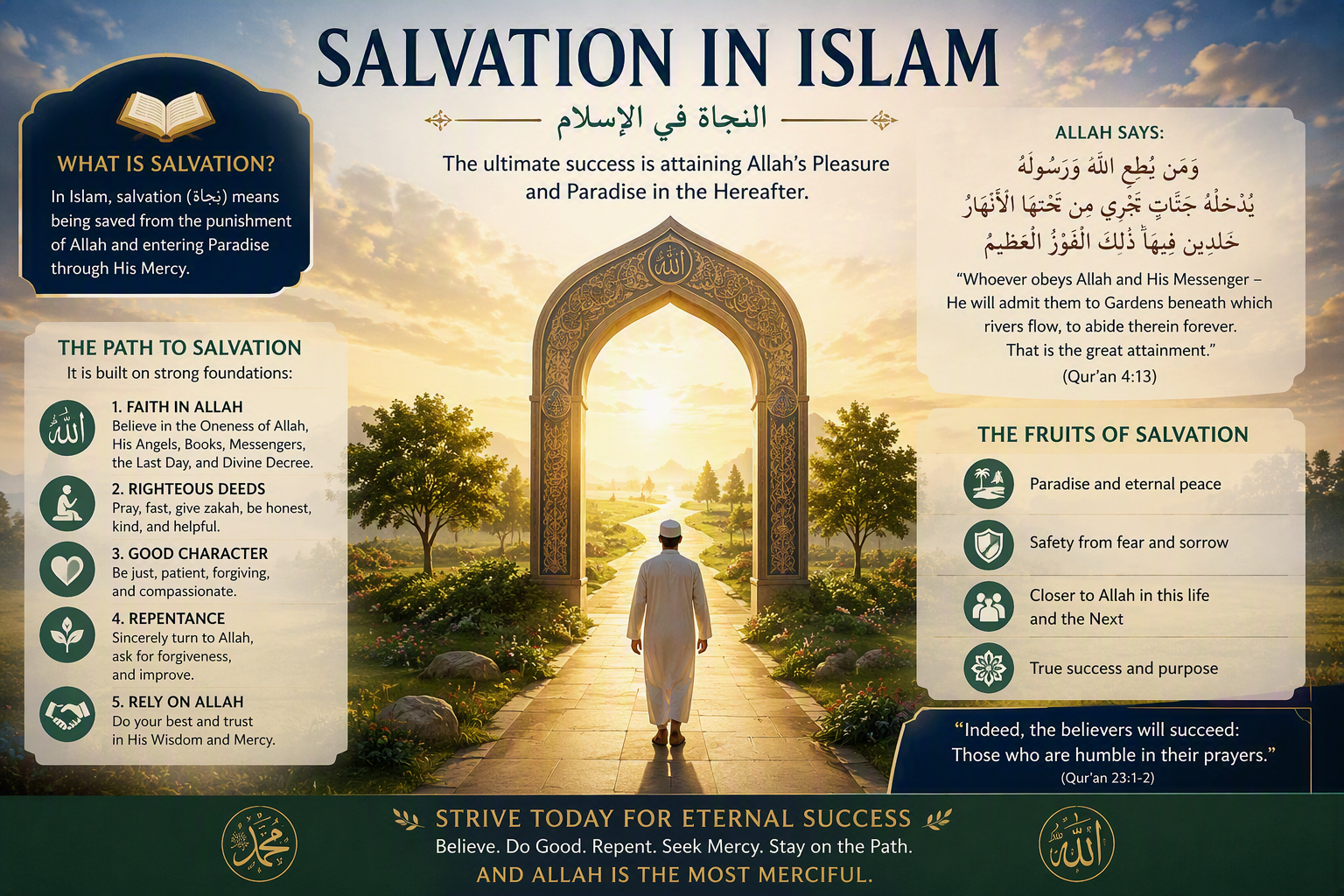
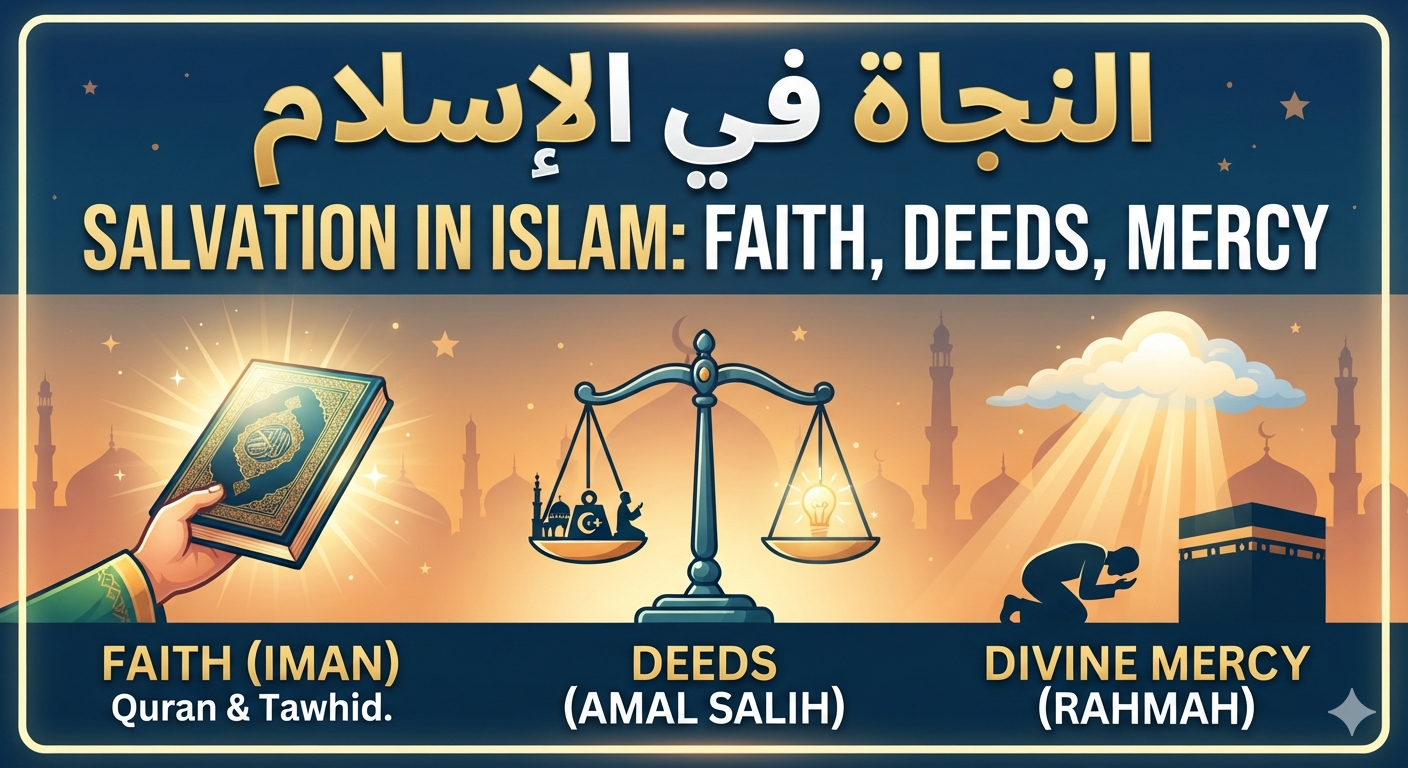
Salvation is a central theme in Islam. It refers to attaining the mercy and pleasure of Allah (God), being forgiven for one’s sins, and ultimately entering Paradise (Jannah) in the Hereafter. Unlike some religious traditions that view salvation as dependent on a single event or intermediary, Islam teaches that salvation is achieved through sincere faith, righteous actions, repentance, and the boundless mercy of Allah.
Islam presents a balanced understanding of human responsibility and divine grace. While believers are encouraged to strive for righteousness, they are also reminded that salvation ultimately depends on Allah’s mercy and compassion.
The Foundation of Salvation: Faith in Allah
The first and most important requirement for salvation in Islam is faith (Iman). Muslims believe in the oneness of Allah and accept His guidance as revealed through the prophets, culminating in the message of Prophet Muhammad (peace be upon him).
Faith in Islam includes:
- Belief in Allah
- Belief in the angels
- Belief in the revealed books
- Belief in the prophets
- Belief in the Day of Judgment
- Belief in divine decree (Qadar)
This faith is not merely intellectual acceptance but a conviction that influences one’s thoughts, actions, and character.
Righteous Deeds and Moral Conduct
Islam teaches that genuine faith should be reflected in good deeds. Acts of worship such as prayer, fasting, charity, and pilgrimage help strengthen a believer’s relationship with Allah. Equally important are honesty, kindness, justice, compassion, and respect for others.
The Qur’an repeatedly links faith with righteous action, emphasizing that believers should strive to live morally upright lives. Good deeds serve as evidence of faith and contribute to success in the Hereafter.
Examples of righteous deeds include:
- Performing the five daily prayers
- Giving charity to those in need
- Helping family and neighbors
- Speaking truthfully
- Treating people fairly and compassionately
The Role of Repentance
Islam recognizes that human beings are imperfect and prone to mistakes. Therefore, repentance (Tawbah) plays a crucial role in the path to salvation. Allah is described as the Most Forgiving and Most Merciful, always willing to forgive those who sincerely turn back to Him.
True repentance involves:
- Recognizing one’s wrongdoing.
- Feeling genuine remorse.
- Stopping the sinful behavior.
- Resolving not to repeat it.
- Making amends when others have been harmed.
The door of repentance remains open throughout a person’s life, offering hope and spiritual renewal.
Divine Mercy and Forgiveness
A distinctive feature of Islamic teachings on salvation is the emphasis on Allah’s mercy. Muslims believe that no one can earn Paradise solely through their deeds. Even the most righteous people depend on Allah’s mercy for ultimate salvation.
This belief encourages humility and prevents self-righteousness. While believers strive to do good, they place their trust in Allah’s compassion, forgiveness, and justice.
The Day of Judgment
Islam teaches that every person will be resurrected and judged by Allah on the Day of Judgment. Each individual will be accountable for their beliefs, intentions, and actions.
On that day:
- Good deeds and bad deeds will be weighed.
- Justice will be perfectly established.
- Wrongdoers will be held accountable.
- The righteous will be rewarded.
The Day of Judgment serves as a reminder of personal responsibility and encourages ethical living.
Paradise: The Ultimate Goal
The ultimate expression of salvation in Islam is entry into Paradise. The Qur’an describes Paradise as a place of peace, happiness, and eternal blessings where believers enjoy closeness to Allah and freedom from suffering, fear, and sorrow.
Paradise represents the fulfillment of human aspirations and the reward for those who lived with faith, sincerity, and devotion to Allah.
Conclusion
The Islamic concept of salvation combines faith, righteous action, repentance, and reliance on Allah’s mercy. Islam teaches that every individual has the opportunity to seek forgiveness, improve their character, and draw closer to their Creator. Through sincere belief, moral living, and trust in divine mercy, Muslims hope to attain success in this life and eternal happiness in the Hereafter. Salvation in Islam is therefore not merely a destination but a lifelong journey of faith, worship, self-improvement, and devotion to Allah.